
Momčilo Gavrić - probably the youngest soldier in WW1
Momčilo Gavrić was probably the youngest soldier in the First World War. Born on May 1st 1906 in Trbusnica near Loznica, Momčilo Gavrić was eighth child of Alimpija and Jelena Gavrić.
 Momčilo Gavrić and another soldier reporting to major Stevan Tucović, 1916. (Wikipedia.org)
In August 1914, the Austro-Hungarian soldiers killed his mother, father, sisters, brothers and grandmother and left his house on fire. Luckily for Momčilo, at the time of the massacre, he was away from home with his uncle.
When he returned home, he saw his family massacred and went to Gučevo to seek for the Serbian army. He found the Sixth artillery regiment of Drina Division, under the command of Major Stevan Tucović. Momčilo told his story to the soldiers and he was accepted to the regiment with Miloš Mišović appointed as his caretaker.
According to one story, Momčilo the same evening took revenge by showing his unit the location of the Austro-Hungarian soldiers and participated in the bombardment.[1]
Аfter the Battle of Cer, he was promoted to the rank of Corporal and given a military uniform.
Thanks to the soldiers from his regiment, Momčilo survived the Serbian army retreat through Albania, a long march during which more than 240,000 people (soldiers and retreating civilian population) lost their lives from cold, starvation, disease and at the hands of Albanian tribesmen.
In 1916, during the Kajmakcalan Battle the Serbian commander Vojvoda (“Duke“) Živojin Mišić was shocked when he saw uniformed 11 year boy. Major Tucović explained the situation, and Vojvoda Mišić promoted Momčilo to Sub-Sergeant (поднаредник), and the order was read out to the whole division.
Momčilo Gavrić survived the First World War and was decorated many times during and after the war.
After the First World War trough a British mission that was helping war orphans in Serbia, Momčilo was sent to England, where he finished his education at the Henry Wreight School in Faversham, Kent.
He returned to Serbia in 1921 and in Trbušnica, he was reunited with his three brothers who had survived the murders in 1914 [2].
Momčilo Gavrić died in Belgrade in 1993.

 Photograph of Momčilo Gavrić with a wounded arm, 1918. By Unknown - Muzej Jadra; http://www.blic.rs/Vesti/Beograd/547184/Beograd-ce-dobiti-spomenik-Momcilu-Gavricu-najmladjem-vojniku-Prvog-svetskog-rata, Public Domain, https://commons.wikimedia.org/w/index.php?curid=39376364
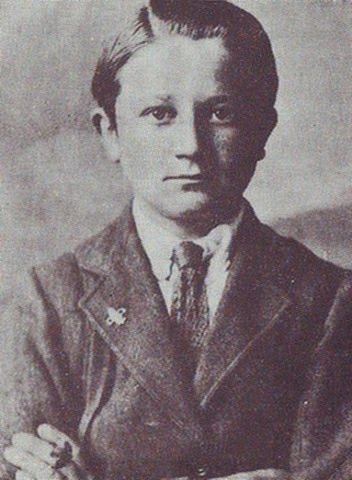
 Post-war photograph of Momčilo Gavrić in uniform. By Unknown - http://prvisvetskirat.wikidot.com/momcilo-gavric, Public Domain, https://commons.wikimedia.org/w/index.php?curid=30577365
 Kosara and Momčilo Gavrić, 1939. By Unknown - http://prvisvetskirat.wikidot.com/momcilo-gavric, Public Domain, https://commons.wikimedia.org/w/index.php?curid=30577078
References:
1.Momčilo Gavrić
2.Momčilo Gavrić - najmlađi vojnik Prvog svetskog rata ("Večernje novosti", 31 August 2013)

In August 1914, the Austro-Hungarian soldiers killed his mother, father, sisters, brothers and grandmother and left his house on fire. Luckily for Momčilo, at the time of the massacre, he was away from home with his uncle.
When he returned home, he saw his family massacred and went to Gučevo to seek for the Serbian army. He found the Sixth artillery regiment of Drina Division, under the command of Major Stevan Tucović. Momčilo told his story to the soldiers and he was accepted to the regiment with Miloš Mišović appointed as his caretaker.
According to one story, Momčilo the same evening took revenge by showing his unit the location of the Austro-Hungarian soldiers and participated in the bombardment.[1]
Аfter the Battle of Cer, he was promoted to the rank of Corporal and given a military uniform.
Thanks to the soldiers from his regiment, Momčilo survived the Serbian army retreat through Albania, a long march during which more than 240,000 people (soldiers and retreating civilian population) lost their lives from cold, starvation, disease and at the hands of Albanian tribesmen.
In 1916, during the Kajmakcalan Battle the Serbian commander Vojvoda (“Duke“) Živojin Mišić was shocked when he saw uniformed 11 year boy. Major Tucović explained the situation, and Vojvoda Mišić promoted Momčilo to Sub-Sergeant (поднаредник), and the order was read out to the whole division.
Momčilo Gavrić survived the First World War and was decorated many times during and after the war.
After the First World War trough a British mission that was helping war orphans in Serbia, Momčilo was sent to England, where he finished his education at the Henry Wreight School in Faversham, Kent.
He returned to Serbia in 1921 and in Trbušnica, he was reunited with his three brothers who had survived the murders in 1914 [2].
Momčilo Gavrić died in Belgrade in 1993.

Momčilo Gavrić with other Serbian soldiers.
By Unknown - http://prvisvetskirat.wikidot.com/momcilo-gavric, Public Domain, https://commons.wikimedia.org/w/index.php?curid=30577307


Graduation portrait taken in Faversham, Kent, 1921. By Unknown - https://istorijat.wordpress.com/2013/02/23/, Public Domain, https://commons.wikimedia.org/w/index.php?curid=30577170


References:
1.Momčilo Gavrić
2.Momčilo Gavrić - najmlađi vojnik Prvog svetskog rata ("Večernje novosti", 31 August 2013)


