"Serbian Naval Commander" - Ilija Gojković - The General Who Never Surrendered

Ilija Gojković (Drenovac, August 2, 1854 – Ionian Sea, February 15, 1917) was a Serbian general and Minister of War of the Kingdom of Serbia. Rising from the ranks of an ordinary soldier, he became one of the few Serbian generals to build his entire military career without graduating from a military academy. 

Ilija Gojković (third from right) with diplomats and Branislav Nushic (seccond from right) at the train station in Bitola 1912/13
Ilija Gojković (third from right) with diplomats and Branislav Nushic (second from right) at the train station in Bitola 1912/13 (Photo: State Archives of Macedonia, Bitola Department (Manaki Fund))


Remembered for his extraordinary courage and leadership, Gojković was also the only general of the Serbian Army to die in direct combat — killed in 1917 after defiantly opening fire with a handgun on a German submarine that demanded his surrender in the Ionian Sea.

Born on August 2, 1854, in the village of Drenovac near Paraćin, Gojković completed the Kruševac Gymnasium in 1870. At just sixteen years old, he joined the Army of the Principality of Serbia as a volunteer. After six years of service as a non-commissioned officer and military clerk, he was promoted to Second Lieutenant of Infantry despite never attending the Military Academy.

Participation in the Serbian–Turkish Wars

Gojković distinguished himself during the Serbian–Turkish Wars. In 1876, he fought at Veliki Izvor as commander of the Homolje Battalion of the National Army. For his bravery, he received the Silver Medal for Courage and the Russian Order of Saint Stanislaus with Swords, Third Class.

During the campaigns of 1877 and 1878, he participated in the battles of Gramada and the liberation of Niš, earning the Gold Medal for Courage. After the war, in 1879, he took part in suppressing the Albanian uprising in the Toplica region.

Rise Through the Serbian Army Ranks

In the Serbian–Bulgarian War of 1885, Gojković commanded the 4th Battalion of the 4th Infantry Regiment during the Battle of Slivnitsa. His military career continued to advance steadily: he became a Major in 1889 and a Lieutenant Colonel in 1896, when he was also awarded the Takovo Cross, Fourth Class.

He was promoted to Colonel in 1899 and given command of the Danube Infantry Brigade within the Drina Divisional Area, while also serving as Head of the Economic Department of the Ministry of War.

Political Challenges and Role as Minister of War

In November 1901, Gojković fell out of favor with King Alexander Obrenović and was forced into early retirement. However, he participated in the May Coup of 1903, after which he was reinstated and returned to his former position in the Ministry of War.

From March 4, 1909, to March 1910, he served as Serbia’s Minister of War. He resigned after the government rejected his proposal to modernize the mountain artillery. During his tenure, he received several prestigious decorations, including the Order of the White Eagle, Fourth Class, the Order of Saint Sava, Second Class, and the Russian Order of Saint Stanislaus, First Class.

Balkan Wars and World War I

In 1911, Gojković was appointed commander of the Morava Divisional Area and the First Call Morava Division. He led the division during the Balkan Wars and distinguished himself at the Battle of Kumanovo, where he was promoted to General and awarded the Karađorđe’s Star with Swords, Fourth Class.


Ilija Gojković (sitting in the middle) with diplomats and Branislav Nushic (sitting left) in Bitola 1912/13 (Photo: State Archives of Macedonia, Bitola Department - Manaki Fund)
Ilija Gojković (sitting in the middle) with diplomats and Branislav Nushic (standing in the middle) in Bitola 1912/13 (Photo: State Archives of Macedonia, Bitola Department - Manaki Fund)


He continued commanding the Morava Division during World War I, particularly in the Battles of Cer and Kolubara. Gojković became renowned for his courage and personal leadership, often encouraging soldiers from the front lines. His troops affectionately called him “our old uncle” (“naš Čiča”).

Later, he briefly commanded the Užice Army and then the Timok Army, which successfully defended Serbia’s borders against attacks by the Bulgarian First Army. His forces distinguished themselves in the fighting near Kačanik before retreating through Albania to Corfu during the Serbian army’s great withdrawal. During this retreat, Gojković contracted typhus in Durrës and was sent to France for treatment.

Death in the Ionian Sea

While returning from France to the Macedonian Front, near Sicily on February 15, 1917, the ship Mimas, carrying General Gojković, was torpedoed by the German submarine U-39 under the command of Walter Forstmann.

After boarding a lifeboat, the German submarine surfaced and demanded the surrender of the officers in the boat. Gojković refused with the words:

“A Serbian general never surrenders!”

He then opened fire on the submarine with his pistol. The submarine’s machine gun immediately cut him down, and the lifeboat sank into the Ionian Sea.

Legacy of Ilija Gojković

Ilija Gojković is remembered as one of Serbia’s bravest military leaders — a self-made officer who rose from the ranks of an ordinary soldier to the rank of general through courage, discipline, and battlefield leadership. His refusal to surrender in the final moments of his life became one of the enduring symbols of Serbian military honor and resistance.


Video - Breakthrough on the Macedonian Front during the First World War - military archival material


A video showing the breakthrough of the Macedonian front during World War I. Starting from the battle of Dobro Pole, it follows the advance of the armies through Macedonia and Serbia. The legends are in Polish, so far I have not been able to find who is the author /producer.

00:00 - Decydujące zwyciestwo armii wschodniej (Decisive victory of the eastern army) 00:05 - Z armja generala henrys From General Henry's Army 00:09 - Linja Bulgarskiej obrony Bulgarian Defense Line 00:46 - Bowbardowanie pozycyi nieprzyjacielskih Bombardment of enemy positions 03:19 - Pierwsi jency The first prisoners 04:02 - Materyal wojenny porzucony Abandoned war material 04:35 - Wies Zowik Wzieta przez oddzialy greckie The village of Zowik was taken by Greek troops 04:47 - Ambulans bulgarski zajety przez wojska sprzymierzencow Bulgarian ambulance captured by allied forces 05:19 - Wies Starowina wzieta przez francuzow The village of Starowina was taken by the French 05:52 - Prilep 06:16 - Wejscie pierwszych oddzialow francuzkih Entry of the first French troops 07:29 - Material Wojenny porzycony na dworcu przez nieprzyjaciela War Material Left at the Station by the Enemy 07:36 - Glowny atak od Sokola do Dobropolje (15 wrzesnia 1918) Main attack from Sokol to Dobropole (September 15, 1918) 07:56 - Jency wzieci do niewoli przez dywizja kolonialna francuzka w dzien ataku Prisoners taken prisoner by the French colonial division on the day of the attack 09:34 - Stanowisko Bulgarskie w Dobropoliju (1700 metrow wysoksci) zniszczone przez nasze granaty Bulgarian site in Dobropol (1700 meters high) destroyed by our grenades 09:54 - Dywizja Poludniowych-Slowian przecodzi wskros linije francuzkie by scigac nieprzyjaciela The South Slavic Division will cross the French lines to pursue the enemy. 10:47 - Okopy zdobyte. Kilku Jencow Trenches captured. Several prisoners 11:29 - Zdobycz na nieprzyjacielu Enemy Prey 12:04 - Armata niemiecka zdobyta przez Serbow i skierowana przeciwko Bulgarom German cannon captured by Serbs and directed against Bulgarians 12:22 - Pulk poludniowski wychodzacy na poscig The Southern Regiment going out to pursue 13:12 - Pierwsza wies Serbska odzyskana: Rozden Spalony przez Bulgarow The first Serbian village reclaimed: Rozden Burned by the Bulgarians 13:32 - Stare kobiety placza nad zgliszczami swych domow Old women cry over the ruins of their homes 13:58 - Wyzad naprzod. Wojska sprzymierzencow wdzieraja sie na gory 1500 do 2000 metrow wysokosci Forward. Allied forces are breaking into the mountains 1,500 to 2,000 meters high 15:32 - Lekkie i ciezkie baterje opuszczone przez nieprzyjaciela Light and heavy batteries abandoned by the enemy 16:07 - Kadawar zdobyty przez Serbow, po przejsciu 100 kilometrow w gorach w siagu trzech dni Kawadarci conquered by the Serbs, after walking 100 kilometers in the mountains in three days 16:30 - Senegalczyk Diahne Cassana uwolniony po dwoch latach niewoli u Bulgarow. Wlada ich jezykiem i sluzi za slomacza. Senegalese Diahne Cassana freed after two years of captivity by the Bulgarians. Speaks their language and serves as a ???. 16:41 - Gradsco. Bulgarzy spalili sklady aprowizacijne i dworzec kolejowy Gradsko. Bulgarians burned down food stores and the railway station 16:49 - Z pierwsza armja serbska With the first Serbian army 18:37 - Most na Kriwolaka przezwany przez nieprzyjaciela The bridge on Kriwolak, demolished by the enemy 19:00 - Dworzec kolejowy gdzie nieprzyjaciel zostawie liczny material wojenny Railway station where the enemy left a lot of war material

Fight in the skies - First World War - Balkan Front - Part 6 - Photo Gallery

Fight in the skies - First World War - Balkan Front - Part 6 - Photo Gallery
Photos are an excerpt from the book: "Ратни албум 1914-1918, Author Андра Поповић, published in Belgrade, 1926 during the Kingdom of Serbs, Croats and Slovenes. Captions above the photos, are original captions from the book, which is also in Serbian and French language.

Note: some of the photos are from other fronts

1. Jean Navarre, the second best celebrated French pilot (20 years old)
Jean Navarre, the second best celebrated French pilot (20 years old)

2. "To Pegoud the fallen hero from his enemies" was the inscription on the wreath which the Germans threw unto the place where he fell
"To Pegoud the fallen hero from his enemies" was the inscription on the wreath which the Germans threw unto the place where he fell

3. Warnefard, an Englishman who shot down the first Zeppelin
Warnefard, an Englishman who shot down the first Zeppelin

4. Branko Vukosavljevic, our pilot, treating wounds
Branko Vukosavljevic, our pilot, treating wounds
5. Guynemer the most celebrated French pilot who fell after 51 victories
Guynemer the most celebrated French pilot who fell after 51 victories

6. Lieutenant Fonck May 8th 1918 shot down 6 opponents
Lieutenant Fonck May 8th 1918 shot down 6 opponents

7. Raoul Lufbery, an American fell after 19 victories
Raoul Lufbery, an American fell after 19 victories

8. Willy Coppens, the best Belgian pilot
Willy Coppens, the best Belgian pilot

9. Albert Ball, an Englishman, fell after the 43rd victory
Albert Ball, an Englishman, fell after the 43rd victory

Read more:

Fight in the skies - First World War - Balkan Front - Part 5 - Photo Gallery

Fight in the skies - First World War - Balkan Front - Part 5 - Photo Gallery
Photos are an excerpt from the book: "Ратни албум 1914-1918, Author Андра Поповић, published in Belgrade, 1926 during the Kingdom of Serbs, Croats and Slovenes. Captions above the photos, are original captions from the book, which is also in Serbian and French language.

Note: some of the photos are from other fronts

1. German aeroplane bombs (50, 100, 300 and 1000 kgr.)
German aeroplane bombs (50, 100, 300 and 1000 kgr.)

2. A shot down French aeroplane
A shot down French aeroplane

3. An aeroplane fitted out with heavy bombs which are to be seen
An aeroplane fitted out with heavy bombs which are to be seen

4. A shot down German aeroplane
A shot down German aeroplane

5. Machine gun in action high up in the sky
Machine gun in action high up in the sky

6. A German aeroplane fallen behind German trenches
A German aeroplane fallen behind German trenches

7. A shot down apparatus whose pilot was entirely burnt
A shot down apparatus whose pilot was entirely burnt

8. A shot down aeroplane and beside it the dead pilot
A shot down aeroplane and beside it the dead pilot


Read more:

Fight in the skies - First World War - Balkan Front - Part 4 - Photo Gallery

Fight in the skies - First World War - Balkan Front - Part 4 - Photo Gallery
Photos are an excerpt from the book: "Ратни албум 1914-1918, Author Андра Поповић, published in Belgrade, 1926 during the Kingdom of Serbs, Croats and Slovenes. Captions above the photos, are original captions from the book, which is also in Serbian and French language.

1. Gunshots against aeroplanes
Gunshots against aeroplanes

2. One of our aeroplanes shot down at the Salonica front
One of our aeroplanes shot down at the Salonica front

3. German aeroplane throws bombs unto the railway train
German aeroplane throws bombs unto the railway train

4. One of our fallen aeroplanes at the Salonica front
One of our fallen aeroplanes at the Salonica front

5. An aeroplane ignites a captive balloon with a bomb and throws it down
An aeroplane ignites a captive balloon with a bomb and throws it down

6. The remains of a fallen aeroplane
The remains of a fallen aeroplane

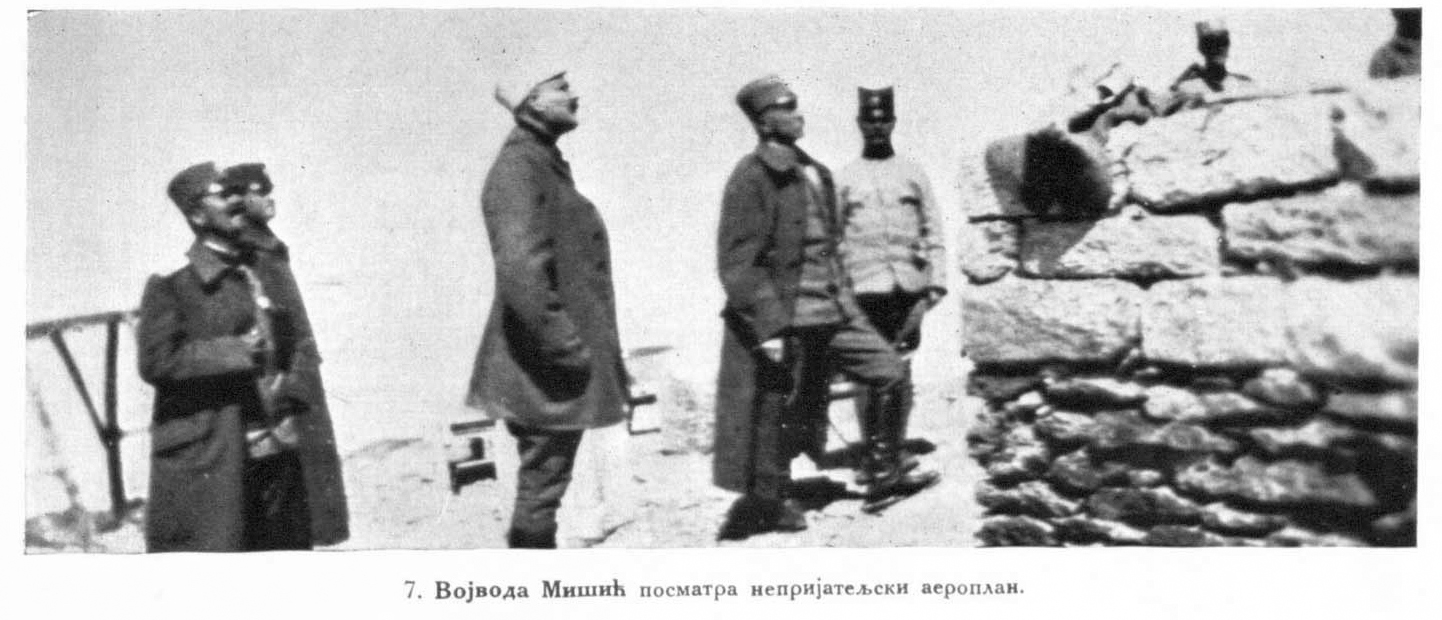
7. Field-marshal Misic watches an enemy's aeroplane
Field-marshal Misic watches an enemy's aeroplane

8. D. Milosavljevic, the fallen pilot
D. Milosavljevic, the fallen pilot

9. H. Schneider, a pilot fallen at the Salonica front
H. Schneider, a pilot fallen at the Salonica front

10. The enemy's aeroplane throws bombs

The enemy's aeroplane throws bombs


Read more:

Fight in the skies - First World War - Balkan Front - Part 3 - Photo Gallery

Fight in the skies - First World War - Balkan Front - Part 3 - Photo Gallery
Photos are an excerpt from the book: "Ратни албум 1914-1918, Author Андра Поповић, published in Belgrade, 1926 during the Kingdom of Serbs, Croats and Slovenes. Captions above the photos, are original captions from the book, which is also in Serbian and French language.

1. Gunshots leveled against aeroplanes
Gunshots leveled against aeroplanes

2. Counter-aeroplane guns at Katunac
Counter-aeroplane guns at Katunac

3. Counter-aeroplane guns masked
Counter-aeroplane guns masked

4. H.R.H. the Crown-Prince  watches the battle in the air


 H.R.H. the Crown-Prince  watches the battle in the air

5. Counter-aeroplane guns as a protecion for the camp
Counter-aeroplane guns as a protecion for the camp

6. "Oluj" aeroplane, which did good service at the commencement of the war
"Oluj" aeroplane, which did good service at the commencement of the war

7. Distinction of our and French airmen on the Salonica front
Distinction of our and French airmen on the Salonica front

8. A shot down German Zeppelin at the Salonica front
A shot down German Zeppelin at the Salonica front

9. Burial of sergeant-major Rot in Vertekop near the air-camp.
Burial of sergeant-major Rot in Vertekop near the air-camp.

Read more:

Fight in the skies - First World War - Balkan Front - Part 2 - Photo Gallery

Fight in the skies - First World War - Balkan Front - Part 2 - Photo Gallery
Note: some of the photos are from other fronts
Photos are an excerpt from the book: "Ратни албум 1914-1918, Author Андра Поповић, published in Belgrade, 1926 during the Kingdom of Serbs, Croats and Slovenes. Captions above the photos, are original captions from the book, which is also in Serbian and French language.

1. Combined series of photos of a fortified sector
Combined series of photos of a fortified sector

2. Photograph of a fortress
Photograph of a fortress

3. Photograph of troops leaving their fortress
Photograph of troops leaving their fortress

4. Photographs of occupied trenches greatly damaged by bombs
Photographs of occupied trenches greatly damaged by bombs

5. Photographs of various depots
Photographs of various depots

6. Photograph of the fortress on which the gun loopholes can be distinctly seen
Photograph of the fortress on which the gun loopholes can be distinctly seen

7. Three aeroplane photographic apparatuses
Three aeroplane photographic apparatuses


Read more:

Fight in the skies - First World War - Balkan Front - Part 1 - Photo Gallery

Fight in the skies - First World War - Balkan Front - Part 1 - Photo Gallery
Photos are an excerpt from the book: "Ратни албум 1914-1918, Author Андра Поповић, published in Belgrade, 1926 during the Kingdom of Serbs, Croats and Slovenes. Captions above the photos, are original captions from the book, which is also in Serbian and French language.

1. One year volunteers of our first aviator-school in Pozarevac 1915
One year volunteers of our first aviator-school in Pozarevac 1915

2. A service aeroplane ready for flight
A service aeroplane ready for flight

3. Aeroplane in a tent-hangar
Aeroplane in a tent-hangar

4. Group of officers who have passed a course as aero-observers
Group of officers who have passed a course as aero-observers

5. Aeroplane detachment appointed to the 1st Army
Aeroplane detachment appointed to the 1st Army

6. French pilots and ours at the distribution of decorations
French pilots and ours at the distribution of decorations

7. H.R.H Crown-Prince Aleksandar visits the aero-squadron
H.R.H Crown-Prince Aleksandar visits the aero-squadron

8. A double deck aeroplane as a aervice apparatus.
A double deck aeroplane as a aervice apparatus.

9. Our aeroplane, although greatly damaged, landed safely at Gabrovac.

Our aeroplane, although greatly damaged, landed safely at Gabrovac.

Read more: