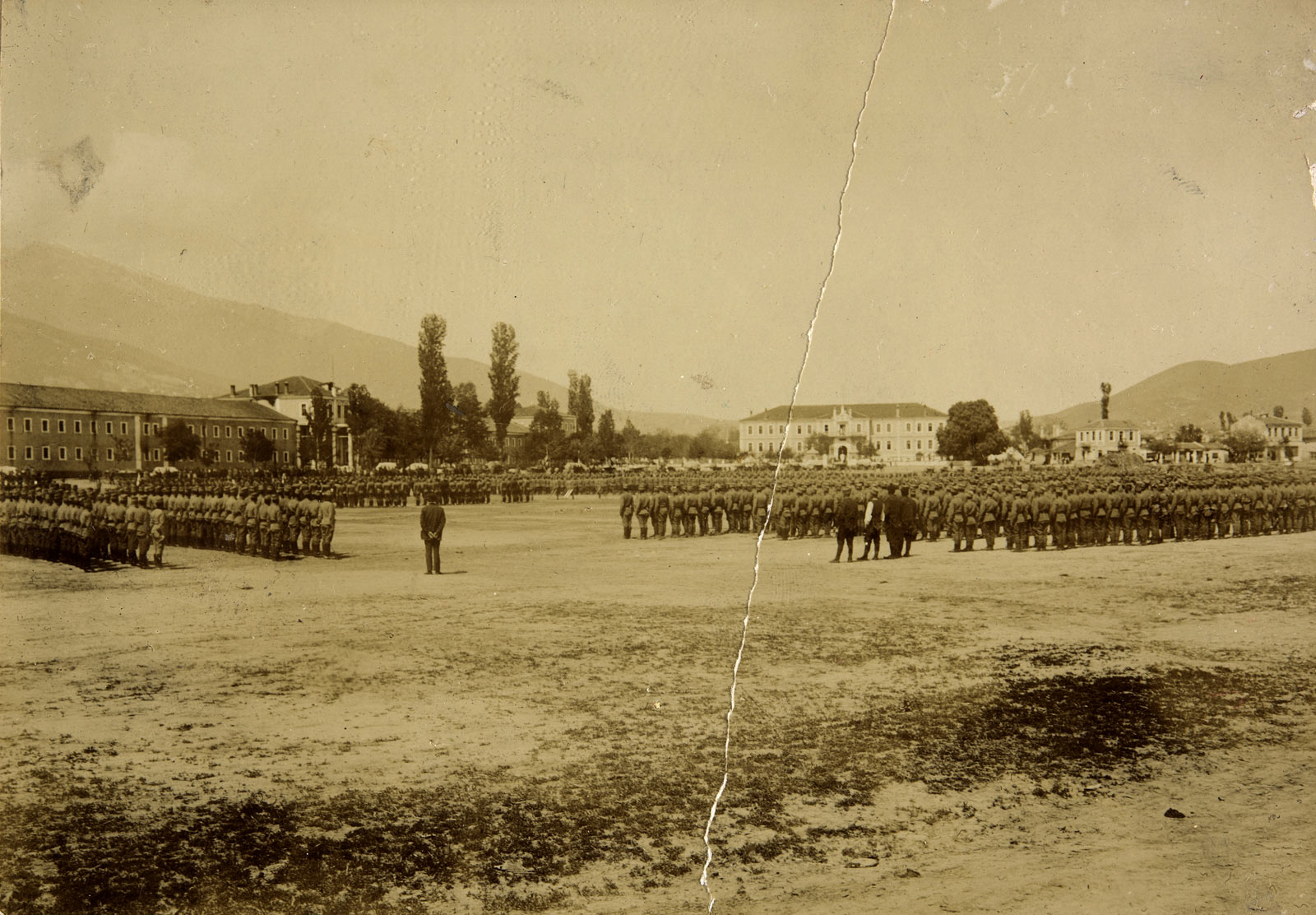
Malaria as an infectious disease in Macedonia during the First World War
Malaria is an infectious disease caused by parasitic protozoans of the genus Plasmodium that infect red blood cells. Malaria is transmitted between humans through mosquito bites of genus Anopheles.
Globally, the malaria is one of the greatest threats to mankind with over 200 million illnesses annually, and approximately one million deaths, mostly children from Africa(1).
Throughout the history, this disease did great damage to the population in Macedonia living in settlements near still water and swamps, which aided by the large number of sunny days and humidity, enabled optimum conditions for the development of malaria.
The most vulnerable regions in Macedonia were in Pelagonija Region along the flow of the Crna River (so called Bitola Marsh) in certain areas along the flow of Vardar River, Katlanovo Marsh, Monospitovo Marsh etc. Malarial areas in Macedonia encompassed about 70% of fertile land, on which lived 92-94% of the total population. Each year 60-70% of the population in Macedonia suffered from malaria (2).
In literature the term "Macedonian malaria" is known which during the Balkan Wars and the First World War, made serious problems to the foreign armies who fought in Macedonia. Often military operations were delayed or canceled due to the large number of soldiers infected by malaria, which caused great concern to the commands on both sides of the front. For example, in spring 1918. Some 25,000 British troops were sent back home due to severe consequences of chronic malaria (3).
About the victims of the armies that fought in Macedonia and the measures taken by them today we can find a lot of information. But little information we can find about the indirect victims, the civilian population which starved and with reduced immunity was particularly affected by communicable diseases.
Given the fact that during military conflicts there is a constant movement of troops, this led to further spread of malaria in Macedonia. Poor living standards, the illiterate population, poor living habits, the small number of medical personal, further helped the spread of this and other infectious diseases. All this resulted in an extremely high rate of mortality, particularly among children. Namely, malaria in Macedonia has for centuries been an endemic disease with epidemic eruptions and morbidity greater than 80% in individual malarious areas and in the war years it reached frightening proportions with high mortality especially among the children(4).
How many people in Macedonia died from malaria during the First World War is difficult to determine, but overwhelming is the percentage of the total number of victims. According to some sources, during the First World War, Serbia had the highest percentage of casualties in proportion to the total population, 16.67% - 27.78% (5) (Vardar part of Macedonia was part of Serbia).
It should be borne in mind that these statistics refer to the whole territory of Serbia then, and we can only imagine that the section near the front line (Macedonian Front) was with far higher percentage of casualties. Many villages were totally destroyed in the period, with mortality over 60% in certain regions. Also, the above statistics do not take into account the epidemic of Spanish fever (1918-1919) which worldwide took more than 50 million lives, and which is a direct consequence of the war.
Today, there are only few articles about these victims and especially striking is the fact that neither can roughly assume their number.
After the war, malaria continued to hair in Macedonia until 60-70-ies of the 20th century, when the government of Yugoslavia has taken measures for drying the wetlands, arranging the riverbeds and introduced various measures to protect the population . Thanks to this, in 1972 there were no patients infected with malaria.
How many generations have been saved thanks to these measures and whether those who carried them out they will ever get the deserved recognition, are questions which remain to be answered.
Pargovski Jove,
Macedonia 1912-1918
Literature:
1. Министерство за здравство на Репиблика Македонија „УПАТСТВО ЗА МЕДИЦИНСКОТО ЗГРИЖУВАЊЕ ПРИ МАЛАРИЈА“
2. Петар Бојџиевски, Рената Бојаџиевска – Цветковска „Санитетот во Македонија за време на Балканските и Првата светска војна“ Битола 2011
3. Проф. д-р Никтополијан Чернобузов, „Маларија“, Београд, 1949, 7-13.
4. Верица Јосимовска „ЕПИДЕМИИТЕ ВО ВАРДАРСКИОТ ДЕЛ НА МАКЕДОНИЈА И БОРБАТА СО НИВ ЗА ВРЕМЕ НА ВОЈНИТЕ (1912-1918)“ Штип 2014
5. Wikipedia - World War I casualties (https://en.wikipedia.org/wiki/World_War_I_casualties)
Globally, the malaria is one of the greatest threats to mankind with over 200 million illnesses annually, and approximately one million deaths, mostly children from Africa(1).
Throughout the history, this disease did great damage to the population in Macedonia living in settlements near still water and swamps, which aided by the large number of sunny days and humidity, enabled optimum conditions for the development of malaria.
The most vulnerable regions in Macedonia were in Pelagonija Region along the flow of the Crna River (so called Bitola Marsh) in certain areas along the flow of Vardar River, Katlanovo Marsh, Monospitovo Marsh etc. Malarial areas in Macedonia encompassed about 70% of fertile land, on which lived 92-94% of the total population. Each year 60-70% of the population in Macedonia suffered from malaria (2).
In literature the term "Macedonian malaria" is known which during the Balkan Wars and the First World War, made serious problems to the foreign armies who fought in Macedonia. Often military operations were delayed or canceled due to the large number of soldiers infected by malaria, which caused great concern to the commands on both sides of the front. For example, in spring 1918. Some 25,000 British troops were sent back home due to severe consequences of chronic malaria (3).
 |
| Malarious regions in Europe during the First World War (Source: https://malariajournal.biomedcentral.com/articles/10.1186/1475-2875-13-497) |
Given the fact that during military conflicts there is a constant movement of troops, this led to further spread of malaria in Macedonia. Poor living standards, the illiterate population, poor living habits, the small number of medical personal, further helped the spread of this and other infectious diseases. All this resulted in an extremely high rate of mortality, particularly among children. Namely, malaria in Macedonia has for centuries been an endemic disease with epidemic eruptions and morbidity greater than 80% in individual malarious areas and in the war years it reached frightening proportions with high mortality especially among the children(4).
How many people in Macedonia died from malaria during the First World War is difficult to determine, but overwhelming is the percentage of the total number of victims. According to some sources, during the First World War, Serbia had the highest percentage of casualties in proportion to the total population, 16.67% - 27.78% (5) (Vardar part of Macedonia was part of Serbia).
It should be borne in mind that these statistics refer to the whole territory of Serbia then, and we can only imagine that the section near the front line (Macedonian Front) was with far higher percentage of casualties. Many villages were totally destroyed in the period, with mortality over 60% in certain regions. Also, the above statistics do not take into account the epidemic of Spanish fever (1918-1919) which worldwide took more than 50 million lives, and which is a direct consequence of the war.
Today, there are only few articles about these victims and especially striking is the fact that neither can roughly assume their number.
After the war, malaria continued to hair in Macedonia until 60-70-ies of the 20th century, when the government of Yugoslavia has taken measures for drying the wetlands, arranging the riverbeds and introduced various measures to protect the population . Thanks to this, in 1972 there were no patients infected with malaria.
How many generations have been saved thanks to these measures and whether those who carried them out they will ever get the deserved recognition, are questions which remain to be answered.
Pargovski Jove,
Macedonia 1912-1918
Literature:
1. Министерство за здравство на Репиблика Македонија „УПАТСТВО ЗА МЕДИЦИНСКОТО ЗГРИЖУВАЊЕ ПРИ МАЛАРИЈА“
2. Петар Бојџиевски, Рената Бојаџиевска – Цветковска „Санитетот во Македонија за време на Балканските и Првата светска војна“ Битола 2011
3. Проф. д-р Никтополијан Чернобузов, „Маларија“, Београд, 1949, 7-13.
4. Верица Јосимовска „ЕПИДЕМИИТЕ ВО ВАРДАРСКИОТ ДЕЛ НА МАКЕДОНИЈА И БОРБАТА СО НИВ ЗА ВРЕМЕ НА ВОЈНИТЕ (1912-1918)“ Штип 2014
5. Wikipedia - World War I casualties (https://en.wikipedia.org/wiki/World_War_I_casualties)